
If you’ve seen “JOMO” in a text message, social media post, or comment section, you may have wondered what it means. Unlike the anxiety associated with constantly staying connected, JOMO celebrates the happiness of stepping away from the noise. It has become a popular internet slang term that encourages people to enjoy their own time instead of worrying about what they’re missing online or in real life.
In this guide, you’ll learn the meaning of JOMO, where it came from, how it’s used across social media platforms, common examples, and how it compares with its opposite, FOMO.
What Does JOMO Mean?
JOMO stands for Joy of Missing Out.
It describes the feeling of happiness, peace, or satisfaction that comes from choosing not to attend an event, follow every trend, or constantly check social media. Instead of feeling left out, someone experiencing JOMO enjoys their own time and focuses on what matters most to them.
Simple Definition
JOMO = Being happy that you’re missing something because you’d rather relax, recharge, or do something you genuinely enjoy.
Where Did JOMO Come From?
JOMO emerged as the positive opposite of FOMO (Fear of Missing Out). While FOMO became popular during the rise of social media, JOMO gained attention as more people recognized the benefits of unplugging from constant notifications and social pressure.
The term has been recorded in dictionaries since the early 2010s and became increasingly popular as conversations around digital wellness, mindfulness, and work-life balance grew.
What Does JOMO Mean in Slang?
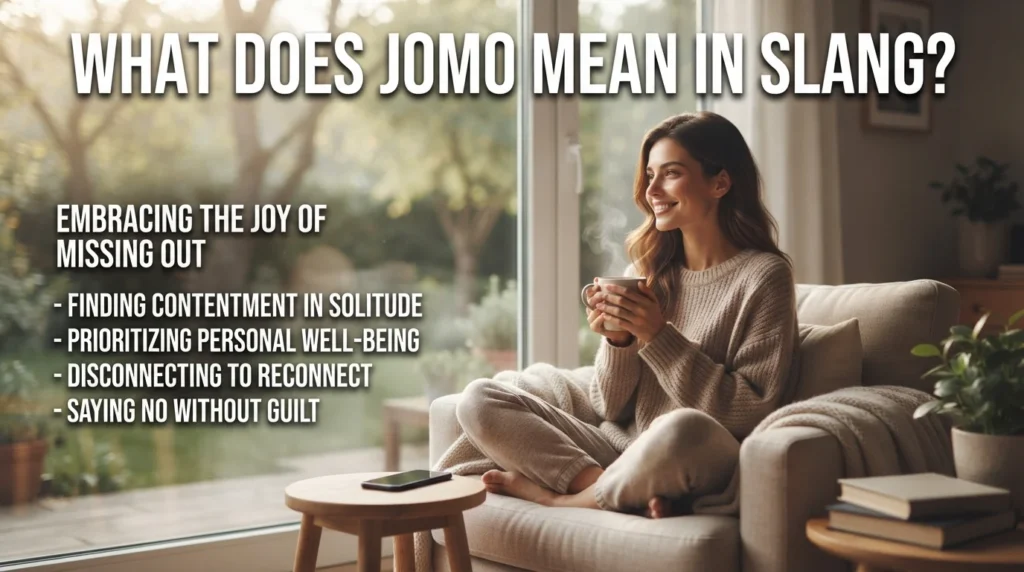
In internet slang, JOMO means:
- Enjoying staying home instead of going out.
- Feeling relieved when plans are canceled.
- Ignoring social pressure to attend every event.
- Taking a break from social media.
- Choosing peace over popularity.
It’s commonly used with a positive tone to show someone is comfortable prioritizing themselves.
How JOMO Is Used Across Different Platforms
Text Messages
People use JOMO when chatting with friends or family.
Example:
“Everyone went to the party, but I’m enjoying JOMO with pizza and Netflix.”
On Instagram, users often post about relaxing weekends, self-care routines, vacations without constant posting, or digital detoxes.
Example:
“Weekend JOMO. Phone on silent, coffee in hand.”
TikTok
TikTok creators use JOMO in videos about:
- Staying home instead of partying.
- Mental health.
- Self-care routines.
- Quiet evenings.
- Digital detox challenges.
X (formerly Twitter)
JOMO is often used humorously after declining invitations or when people enjoy avoiding crowded events.
Example:
“Saw the traffic downtown. Major JOMO today.”
Snapchat
Friends may send “JOMO” after deciding to skip an event and spend time relaxing instead.
Many Reddit discussions describe JOMO as feeling genuinely content staying home, reading, gaming, or spending time alone rather than attending social gatherings.
JOMO vs. FOMO
| JOMO | FOMO |
| Joy of Missing Out | Fear of Missing Out |
| Feeling relaxed | Feeling anxious |
| Enjoying personal time | Worrying about being left out |
| Disconnecting from social media | Constantly checking updates |
| Choosing quality time | Chasing every event |
Think of it this way:
- FOMO: “I can’t believe everyone went without me!”
- JOMO: “I’m glad I stayed home.”
Examples of JOMO in Conversations
Friend 1: Are you coming tonight?
Friend 2: Nope. I’m embracing JOMO with a movie marathon.
Text Message
“I’m skipping the concert. Honestly, JOMO feels amazing.”
Instagram Caption
“Books, coffee, and zero notifications. #JOMO”
Work Chat
“I’m taking the evening offline. Time for some JOMO.”
Why JOMO Has Become So Popular
JOMO resonates because many people experience information overload and social pressure online. Choosing to disconnect can feel refreshing rather than restrictive.
Reasons people embrace JOMO include:
- Less social comparison.
- Better mental well-being.
- Reduced screen time.
- Improved work-life balance.
- More meaningful offline experiences.
Recent lifestyle discussions continue to highlight JOMO as part of broader digital wellness and mindfulness trends.
Common Situations Where People Say JOMO
People often use JOMO when:
- Staying home on a Friday night.
- Ignoring unnecessary notifications.
- Skipping crowded events.
- Enjoying a digital detox.
- Canceling plans to relax.
- Spending time with family instead of scrolling online.
- Reading instead of checking social media.
Similar Internet Slang Terms
If you’re learning online slang, you’ll often see JOMO alongside these expressions:
- FOMO (Fear of Missing Out)
- YOLO (You Only Live Once)
- POV (Point of View)
- IMO (In My Opinion)
- IRL (In Real Life)
- GOAT (Greatest of All Time)
- TL;DR (Too Long; Didn’t Read)
Is JOMO Positive or Negative?
JOMO is almost always positive.
Unlike slang that can be sarcastic or insulting, JOMO usually expresses:
- Contentment.
- Confidence.
- Relaxation.
- Self-care.
- Personal happiness.
It suggests someone is comfortable making choices based on what makes them happy rather than what everyone else is doing.
Summary
JOMO, short for Joy of Missing Out, is a popular internet slang term that encourages enjoying your own time instead of worrying about missing social events or online trends. As the opposite of FOMO, it reflects a healthier approach to social media, emphasizing relaxation, mindfulness, and personal well-being. Whether it’s skipping a party, taking a digital break, or simply enjoying a quiet evening at home, JOMO reminds people that missing out isn’t always a bad thing.
Frequently Asked Questions
What does JOMO stand for?
JOMO stands for Joy of Missing Out.
Is JOMO the opposite of FOMO?
Yes. JOMO is considered the opposite of FOMO because it focuses on enjoying the decision to miss something instead of fearing it.
Is JOMO internet slang?
Yes. JOMO is widely used as internet slang on social media, messaging apps, and online communities.
Is JOMO used by Gen Z?
Yes. While people of all ages use it, JOMO is especially common among Gen Z and Millennials discussing self-care, digital wellness, and mindful living.
Can JOMO refer to social media breaks?
Absolutely. Many people use JOMO to describe taking a break from social media and enjoying life offline.

Emma Carter is an experienced Editor-in-Chief with more than 15 years of experience leading digital publishing teams and developing high quality editorial content across multiple industries. She specializes in editorial strategy, content governance, SEO publishing, and audience engagement. Throughout her career, Emma has worked with writers, editors, researchers, and digital marketing professionals to produce trustworthy, well researched, and reader focused content.