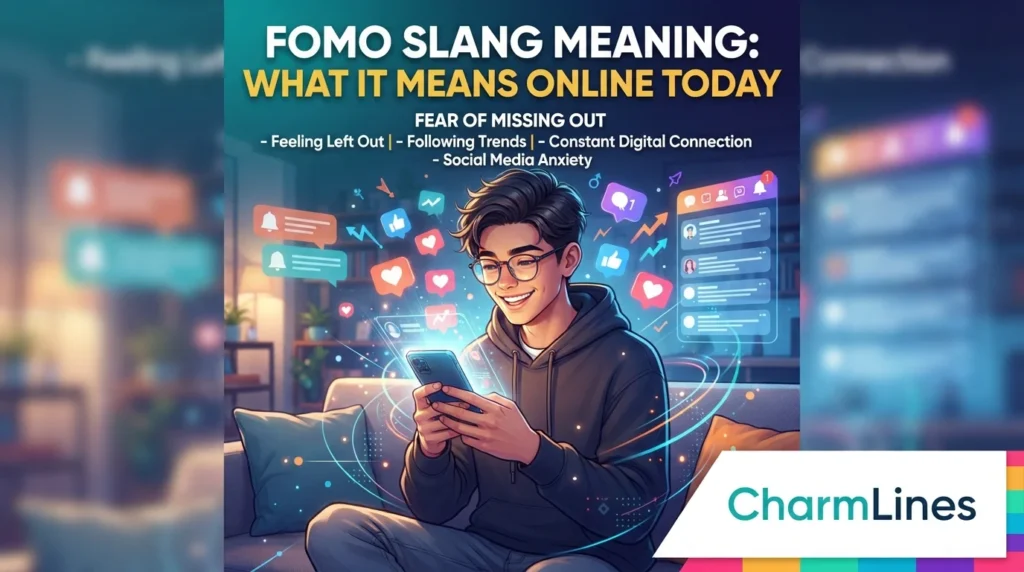
Have you ever seen someone post “I’ve got major FOMO” after missing a concert, party, or trending event? If so, you’re not alone. FOMO is one of the most common internet slang terms used across social media, text messages, gaming communities, and even workplace conversations. It describes the uneasy feeling that you’re missing out on something exciting that others are experiencing. In today’s always-connected digital world, FOMO has become a popular expression for both serious emotions and lighthearted jokes. Understanding what FOMO means and how people use it can help you better understand modern online conversations.
What Does FOMO Mean?
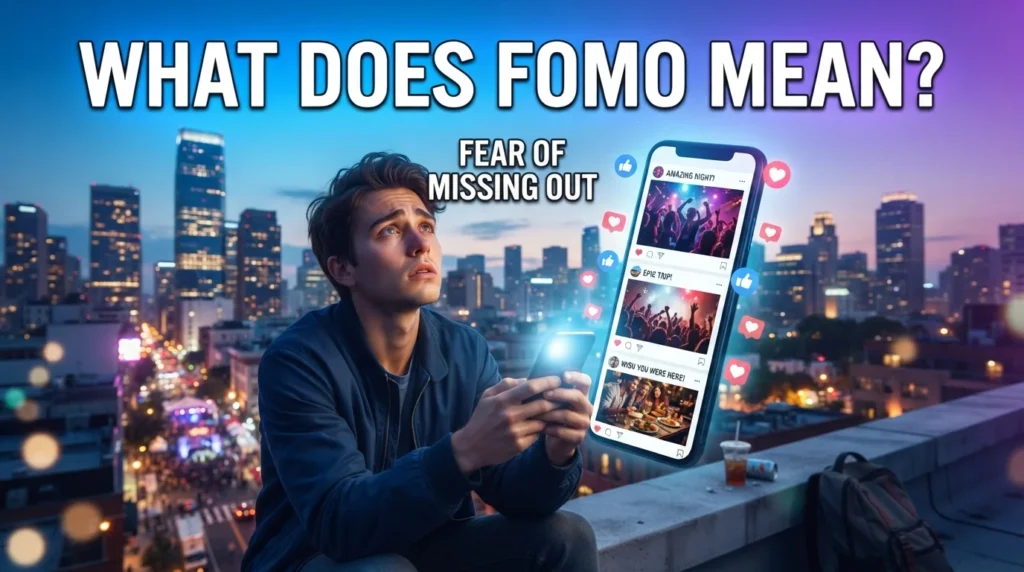
FOMO stands for Fear Of Missing Out.
It refers to the anxiety, concern, or worry that someone else is having a better experience, attending a fun event, or enjoying an opportunity that you are not part of. The term is especially associated with social media, where people constantly share highlights of their lives.
Simple Definition
FOMO means feeling like you’re missing something exciting, important, or enjoyable because you aren’t there or didn’t participate.
Origin of FOMO
The acronym became widely popular during the rise of social media in the early 2010s, although the expression first appeared in the early 2000s. As platforms like Facebook, Instagram, Snapchat, TikTok, and X made it easy to see what others were doing in real time, the term quickly became part of everyday internet vocabulary.
How FOMO Is Used Online
People use FOMO to describe many situations, including:
- Missing a concert or festival
- Not being invited to a party
- Seeing friends on vacation
- Missing a limited-time sale
- Watching others attend a sporting event
- Missing a viral trend
- Skipping a gaming event or livestream
Sometimes the word is used seriously, while other times it is used humorously.
Examples
- “Everyone’s at the beach and I’m stuck at work. Major FOMO!”
- “Don’t post more concert videos. You’re giving me FOMO.”
- “I almost bought it because of FOMO.”
- “Weekend trip looks amazing. I’m getting FOMO.”
FOMO on Different Platforms
Instagram is one of the biggest places where people mention FOMO. Users often feel left out after seeing travel photos, parties, luxury experiences, or celebrations in Stories and Reels.
Example:
“Your vacation photos gave me serious FOMO.”
TikTok
On TikTok, FOMO often appears when users miss:
- Viral challenges
- Trending sounds
- Popular products
- Limited-time events
Example:
“Everyone is trying this trend except me. FOMO is real.”
Snapchat
Friends sharing live moments through Stories can create FOMO because viewers feel like they’re missing the fun.
Example:
“Watching everyone’s Snap Stories is giving me FOMO.”
X
People use FOMO while discussing:
- Breaking news
- Sports events
- Concerts
- Live TV shows
- Cryptocurrency trends
Example:
“I finally bought after all the hype. FOMO got me.”
Discord and Gaming
Gamers commonly use FOMO when talking about:
- Exclusive skins
- Seasonal rewards
- Limited events
- Special game modes
Example:
“I logged in just to avoid FOMO on the new event.”
Is FOMO Always Negative?
Not necessarily.
Many people use it jokingly among friends. However, FOMO can also describe genuine anxiety caused by constantly comparing yourself with others online. Research has linked frequent social media exposure with stronger feelings of missing out for some users, though experiences vary from person to person.
Common Situations Where People Say FOMO
People often say FOMO when they:
- Miss a birthday party
- Can’t attend a concert
- Skip a family vacation
- Miss a flash sale
- See friends hanging out
- Miss a viral meme
- Don’t buy something before it sells out
- Miss a livestream
Related Internet Slang
JOMO
The opposite of FOMO is JOMO, which stands for Joy Of Missing Out. Instead of feeling anxious, someone enjoys staying home or choosing not to participate.
YOLO
YOLO means You Only Live Once. People often use it to encourage taking opportunities instead of experiencing FOMO.
ICYMI
ICYMI stands for In Case You Missed It. It’s commonly used to share news, announcements, or viral posts that someone may have missed.
When Should You Use FOMO?
Use FOMO when you want to express that you’re worried about missing:
- Fun experiences
- Important events
- Social gatherings
- Trending content
- New opportunities
It works well in casual conversations, social media captions, text messages, and online chats.
When Not to Use FOMO
Avoid using FOMO in:
- Formal business emails
- Academic writing
- Professional reports
- Legal documents
Since it’s internet slang, it’s best suited for informal communication.
Why Is FOMO So Popular?
FOMO remains popular because it describes a feeling many people recognize in the digital age. Social media allows users to see vacations, celebrations, purchases, and achievements instantly, making it easy to compare experiences. As a result, the acronym has become a quick way to express that feeling of being left out.
Summary
FOMO stands for Fear Of Missing Out. It describes the feeling that others are enjoying experiences or opportunities without you. The term is widely used across Instagram, TikTok, Snapchat, X, Discord, gaming communities, and text messages. While it’s often used humorously, it can also describe real feelings of anxiety caused by constantly comparing yourself with others online. Learning internet slang like FOMO makes it easier to understand conversations across today’s digital platforms.
FAQs
What does FOMO stand for?
FOMO stands for Fear Of Missing Out.
Is FOMO positive or negative?
It can be both. Many people use it jokingly, while others use it to describe genuine anxiety about missing experiences.
Is FOMO Gen Z slang?
FOMO is widely used by Gen Z, Millennials, and many other age groups. It has become mainstream internet slang.
Where is FOMO most commonly used?
You’ll commonly see it on Instagram, TikTok, Snapchat, X, Discord, Reddit, and in text messages.
What is the opposite of FOMO?
The opposite is JOMO, which means Joy Of Missing Out, enjoying time away from events or social pressure.
Can businesses use FOMO?
Yes. Marketers often create urgency with limited-time offers, countdowns, or exclusive releases to encourage customers to act quickly.

Hannah Cooper is a Relationship Content Specialist with over 8 years of experience creating engaging, relatable, and audience focused content for digital publications. She specializes in relationship advice, romantic communication, pick-up lines, rizz lines, captions, quotes, and conversation starters that connect with readers across different age groups and social platforms.