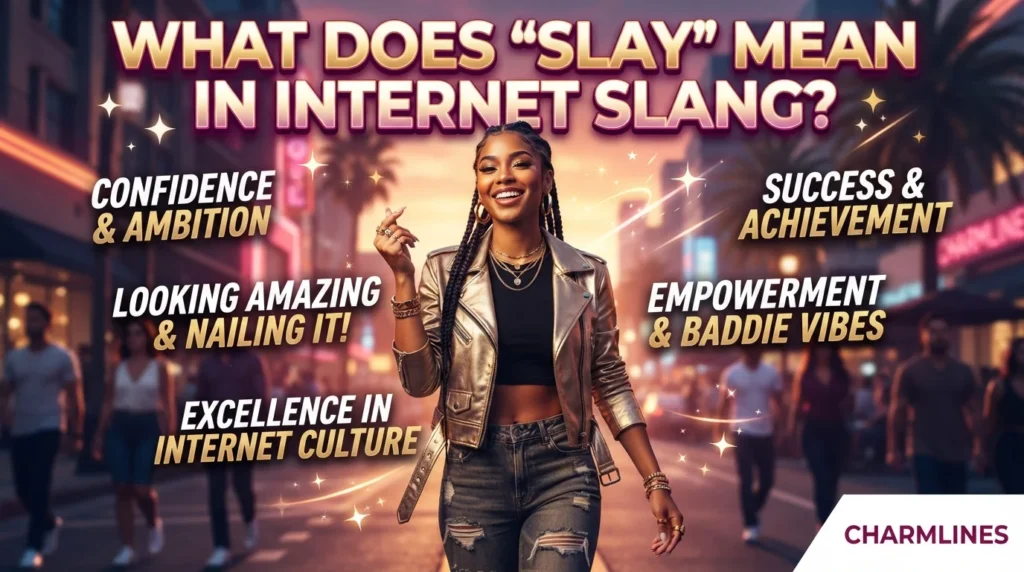
The word “slay” has become one of the most popular internet slang terms across social media. While its traditional meaning is “to kill,” its modern slang meaning is completely different. Today, saying someone “slayed” means they did something exceptionally well, looked amazing, or impressed everyone with confidence, talent, or style. The term has grown from LGBTQ+ ballroom culture into mainstream online language and is now widely used by Gen Z and Millennials across platforms like TikTok, Instagram, X (formerly Twitter), Snapchat, and YouTube.
What Does “Slay” Mean in Slang?
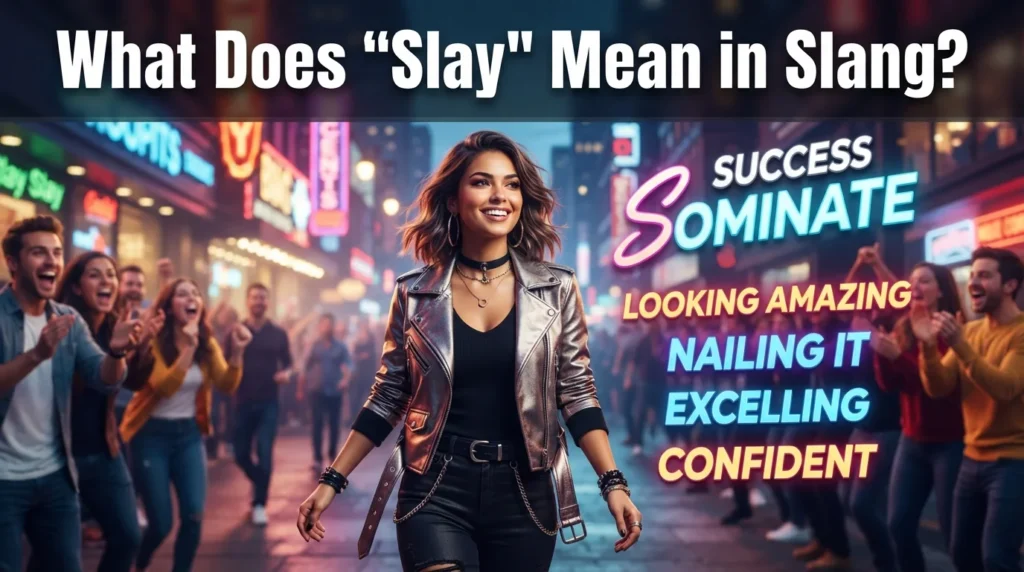
In internet slang, “slay” means:
- To perform exceptionally well.
- To look incredibly attractive or stylish.
- To impress others with confidence or talent.
- To completely dominate a situation.
It is almost always used as a compliment.
Examples
- “Your outfit absolutely slays!”
- “She slayed her presentation.”
- “That makeup look is slay.”
- “You really slayed that performance.”
In casual conversations, people may also say simply:
- “Slay!”
- “Yass, slay!”
- “Slay queen!”
These expressions celebrate someone’s success or appearance.
Search Intent Behind “SLAY Slang Meaning”
Primary Intent
Users want to understand what “slay” means in modern internet conversations and social media.
Secondary Intent
- Learn how to use “slay” correctly.
- Understand where the slang originated.
- See examples in real conversations.
- Know whether it is positive or negative.
The Original Meaning vs. Modern Slang
Originally, slay meant:
To kill someone or something violently.
Examples:
- The knight slayed the dragon.
- The warrior slew his enemies.
Today, the slang version has almost nothing to do with violence.
Instead, it means someone was outstanding, fashionable, confident, or successful. This shift in meaning reflects how internet culture often gives older words entirely new meanings.
Where Did “Slay” Come From?
Although the word itself is centuries old, its modern slang meaning became popular through Black and LGBTQ+ ballroom culture during the 1970s and 1980s. Participants used “slay” to praise flawless fashion, makeup, dancing, and confidence.
Later, drag performers and popular television helped introduce the expression to wider audiences. Social media platforms then accelerated its popularity, making it one of today’s most recognizable compliments online.
How “Slay” Is Used on Different Platforms
TikTok
TikTok creators often use “slay” when reacting to:
- Fashion transformations
- Makeup tutorials
- Dance videos
- Singing performances
- Comedy skits
Example:
“Girl, you slayed that transition!”
Instagram users commonly comment:
- Slay 🔥
- You slayed!
- Slay queen!
- Absolute slay.
These comments usually praise someone’s appearance or content.
X (Formerly Twitter)
People use “slay” to react to:
- Celebrity moments
- Viral tweets
- Award shows
- Sports highlights
- Memes
Example:
“That comeback was a complete slay.”
Snapchat
Friends often reply:
- Slay.
- You ate.
- Slayyy.
It expresses excitement or admiration.
YouTube
Viewers frequently write “slay” in comments under:
- Music performances
- Makeup videos
- Fashion content
- Gaming victories
- Talent showcases
Common Variations of “Slay”
Internet users often stretch or modify the word for emphasis.
Examples include:
- Slay
- Slayyy
- Slayyyy
- Slayed
- Slaying
- Slay Queen
- You Slayed
Each version carries the same positive meaning but with varying enthusiasm.
Is “Slay” Always Positive?
Yes, in most cases.
People use it to compliment someone who:
- Looks great.
- Performs well.
- Wins a competition.
- Shows confidence.
- Creates impressive content.
Occasionally, friends use it sarcastically, but the intended tone is usually obvious from the context.
“Slay” vs. Similar Internet Slang
| Slang | Meaning |
| Slay | Perform amazingly or look fantastic |
| Ate | Did an outstanding job |
| Serve | Show incredible style or confidence |
| Iconic | Extremely memorable or impressive |
| Fire | Excellent or exciting |
| GOAT | Greatest of all time |
These slang terms are often used together in online conversations.
Example:
“You absolutely slayed. You ate. Iconic.”
How to Use “Slay” Correctly
Here are some natural examples:
- “You slayed that interview.”
- “Your haircut is slay.”
- “That concert performance slayed.”
- “She always slays every outfit.”
- “Your editing skills are slaying lately.”
When Not to Use “Slay”
Avoid using “slay” in:
- Business emails
- Academic papers
- Professional reports
- Formal presentations
It is best suited for casual conversations, texting, and social media.
Why Is “Slay” So Popular?
Several reasons explain its popularity:
- Easy to understand.
- Short and expressive.
- Works as both a verb and an exclamation.
- Fits fashion, beauty, gaming, music, and sports.
- Frequently used by influencers and celebrities.
- Spreads quickly through viral videos and memes.
Summary
In today’s internet slang, “slay“ means doing something exceptionally well, looking amazing, or impressing others with confidence and style. Although the word originally referred to killing someone, its modern meaning is entirely positive. It has become one of the internet’s favorite compliments and appears daily across TikTok, Instagram, Snapchat, X, YouTube, and other social platforms. Knowing how and when to use “slay” helps you better understand modern online conversations and internet culture.
FAQs
What does “slay” mean in texting?
It means someone did an amazing job or looked fantastic.
Is “slay” a compliment?
Yes. It is almost always used as positive praise.
What does “slay queen” mean?
It is an enthusiastic compliment encouraging someone who looks confident, stylish, or successful.
Can guys use “slay”?
Yes. Anyone can use or receive the compliment.
Is “slay” Gen Z slang?
It is widely used by Gen Z, but its modern slang roots trace back to Black and LGBTQ+ ballroom culture before becoming mainstream online.
Is “slay” still popular?
Yes. It remains one of the most commonly used slang words across major social media platforms.

Ava Thompson is a skilled SEO Content Strategist with over 12 years of experience helping digital publications grow their organic visibility through strategic content planning and search engine optimization. She specializes in keyword research, topical authority, semantic SEO, content architecture, and audience focused publishing strategies that align with modern search engine algorithms.